



You might feel unsure about scissoring because misconceptions often surround this topic. Many beginners report myths such as believing it’s just a porn fantasy, assuming all couples can try it, or thinking it’s the only way for couples with vulvas to have sex. Approach these Misconceptions About Scissoring with curiosity. Every question and feeling you have is valid. By learning accurate information, you set yourself up for comfort, safety, and pleasure.
Key Takeaways
- Scissoring is a real sexual practice, not just a fantasy from adult films. Many women enjoy it as a form of intimacy.
- Research shows that a significant number of LGBTQ+ individuals practice scissoring, confirming its validity as a sexual activity.
- Scissoring is not the only way for queer women to have sex. There are many other forms of intimacy to explore.
- Comfort during scissoring varies by individual. Listen to your body and adjust positions to avoid discomfort.
- Open communication with your partner enhances comfort and intimacy. Discuss feelings and boundaries before trying scissoring.
- Scissoring does not guarantee orgasm. Many people need additional stimulation for pleasure.
- Use protective barriers like dental dams to reduce the risk of STIs during scissoring.
- Embrace the diversity of sexual experiences. Your journey is unique, and there is no single ‘right’ way to enjoy intimacy.
Misconceptions About Scissoring
Scissoring Is Just a Porn Fantasy
You may have heard that scissoring is only a fantasy created for adult films. This belief is one of the most common misconceptions about scissoring. In reality, scissoring—also known as tribadism—exists as a genuine sexual practice among women, especially in lesbian and bisexual communities. You can find references to tribadism in cultural and historical discussions, which show that it is not limited to the realm of pornography. Some women enjoy scissoring as a form of intimacy and sexual expression, while others may not find it comfortable. Scholar Judith Halberstam notes that tribadism is often left out of mainstream sex research, yet many women practice it regularly.
- Scissoring is recognized as a real sexual activity in LGBTQ+ communities.
- Historical and cultural references confirm its existence beyond adult entertainment.
- Many women report positive experiences with scissoring, though comfort levels vary.
The portrayal of scissoring in pornography often creates unrealistic expectations. Adult films tend to cater to male audiences and present a narrow view of female sexuality. This misrepresentation can shape public perception and lead you to believe that scissoring is only for show. If you want to learn more about authentic sexual experiences, consider exploring educational resources from LGBTQ+ organizations or visiting kissself.com for supportive advice.
Scissoring Is a Myth
Some people claim that scissoring is not real or that nobody actually does it. This is another misconception about scissoring. Research and surveys show that many individuals in lesbian, bisexual, nonbinary, or queer communities engage in scissoring. For example, a survey found that 40% of these individuals practice scissoring regularly. In a 2012 study, 90.8% of women participants reported scissoring during sexual activities with other women.
- A significant percentage of LGBTQ+ individuals include scissoring in their sexual routines.
- Studies confirm that scissoring is a valid and practiced form of intimacy.
You should recognize that scissoring is not a myth. It is a real and pleasurable experience for many people. If you feel curious, you can explore different positions and techniques to find what feels best for you. Social media platforms like Instagram and Twitter feature discussions and advice from sex educators and LGBTQ+ advocates, which can help you learn more about this topic.
Scissoring Is the Only Lesbian Sex
You might think that scissoring is the only way lesbians have sex. This misconception about scissoring is widespread, but it does not reflect the diversity of sexual experiences among queer women. Media often misrepresents lesbian sex by focusing solely on scissoring, ignoring other forms of intimacy.
- Lesbian and queer women enjoy a variety of sexual activities, such as oral sex, clitoral stimulation, dry humping, nipple play, and tribbing.
- The use of strap-ons is not universal and should not define lesbian sex.
- Scissoring is just one option among many ways to connect physically and emotionally.
| Activity | Lesbian Participants | Heterosexual Women | p-value |
|---|---|---|---|
| Putting “sex dates” on calendars | 59 | 46 | <0.001 |
| Saying, “I love you.” | 80 | 67 | <0.001 |
| Background music | 24 | 13 | <0.001 |
| Dimming lights/using candles | 29 | 21 | <0.01 |
| Arranged a romantic getaway | 53 | 43 | <0.01 |
| Discussed erotic fantasies | 44 | 36 | <0.01 |
| Received a back rub | 74 | 63 | <0.001 |
| Light kissing | 92 | 80 | <0.001 |
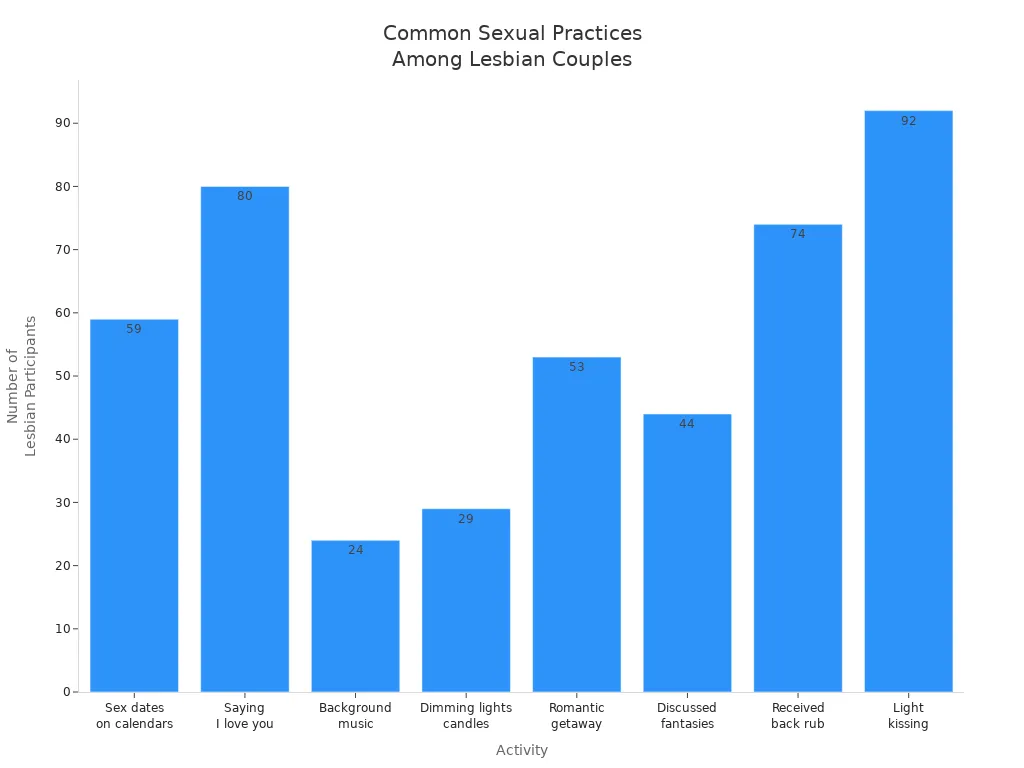
You can see from the table and chart above that lesbian couples engage in a wide range of romantic and sexual activities. These include light kissing, back rubs, and discussing fantasies. Scissoring is just one part of a much broader spectrum. If you want to explore more options, you can find guides and tips at kissself.com.
Tip: You do not need to fit into any stereotype. Your sexual experiences are valid, and you can choose what feels right for you.
Misconceptions About Scissoring can prevent you from exploring your sexuality in a healthy and informed way. By understanding the facts and listening to diverse voices, you empower yourself to make choices that suit your needs and desires.
Comfort and Ease
Scissoring Is Always Comfortable
You may believe that scissoring always feels comfortable, but this is not the case for everyone. Many factors can affect your experience, including flexibility, body type, and previous physical activity. Medical and sexology sources highlight several reasons why scissoring may not feel comfortable for all:
- Flexibility issues can make certain positions painful rather than pleasurable.
- The vigorous nature of scissoring requires stretching to prevent discomfort or injury.
- The act often involves frequent movement and open-legged positions, which can lead to muscle strain or pulls.
You should listen to your body and avoid pushing yourself into positions that cause pain. If you experience discomfort, try adjusting your position or taking a break. Remember, your comfort matters more than matching any expectation set by media or others.
Scissoring Is Easy for Everyone
Scissoring can look simple in media, but beginners often face challenges. You may find that flexibility limits your range of motion. The friction and movement involved can make it difficult to maintain a comfortable rhythm. Beginners sometimes report muscle soreness or awkwardness during their first attempts.
Common challenges include:
- Difficulty with flexibility, leading to discomfort.
- Muscle strain from open-legged positions.
- Pain if you do not stretch beforehand.
- Friction that complicates the use of traditional safer sex barriers.
A table below summarizes common challenges and solutions:
| Challenge | Solution |
|---|---|
| Flexibility limitations | Gentle stretching before sex |
| Muscle strain | Take breaks, change positions |
| Awkwardness | Communicate openly with partner |
| Friction issues | Use water-based lubricant |
You can find more tips and beginner-friendly guides at kissself.com.
Tips for Comfort and Communication
Open communication with your partner improves comfort and intimacy. Sex therapists recommend several strategies to help you and your partner feel safe and connected:
- Create a neutral, judgment-free space for open dialogue.
- Practice active listening and give feedback about what feels good or uncomfortable.
- Normalize conversations about sexual practices to reduce embarrassment.
- Address any anxiety or past experiences that may affect your comfort.
- Foster mutual understanding to build emotional security.
Tip: Start by asking your partner how they feel about trying scissoring. Share your own feelings and boundaries. If something feels uncomfortable, speak up right away.
You can also follow LGBTQ+ sex educators on Instagram for more advice on communication and comfort. For additional resources, visit kissself.com for supportive articles and community discussions.
Misconceptions About Scissoring often ignore the importance of comfort, preparation, and honest communication. By focusing on your needs and staying open with your partner, you create a more enjoyable and positive experience.
Pleasure and Orgasm Myths
Scissoring Guarantees Orgasm
You might expect scissoring to guarantee orgasm, especially if you have seen it portrayed that way in media. In reality, sexual pleasure and orgasm vary greatly from person to person. Many people do not reach orgasm through scissoring alone. According to a 2014 study published in the Journal of Sex Research, only about 18% of women report reaching orgasm from penetration-based activities without additional clitoral stimulation. Scissoring often involves clitoral contact, but the pressure, angle, and movement may not suit everyone’s preferences.
You should know that sexual satisfaction does not depend on a single act or position. Some people find scissoring highly pleasurable, while others may not experience intense sensations or orgasm from it. Factors such as body shape, flexibility, and comfort level play a significant role. If you or your partner do not reach orgasm through scissoring, you are not alone. Many couples explore a variety of techniques to discover what feels best.
Note: Open communication with your partner about what feels good can help you both enjoy the experience more. You can find more tips on sexual communication at kissself.com.
Exploring Other Ways to Enjoy Pleasure
You have many options for experiencing pleasure beyond scissoring. Sex educators recommend exploring different forms of tribadism and creative positions. For example, you can try tribadism on various body parts, such as thighs, knees, or breasts. These alternatives provide pleasurable sensations without requiring the traditional scissoring position.
- Tribadism on the thighs can offer close contact and stimulation.
- Rubbing against your partner’s knees or breasts can create new sensations.
- The Zig Zag Scissors position allows for contact with your partner’s thighs, which some people find more comfortable and enjoyable.
A table below summarizes some alternative ways to enjoy pleasure:
| Technique | Description | Comfort Level |
|---|---|---|
| Thigh tribadism | Rubbing vulva against partner’s thigh | High |
| Knee tribadism | Using partner’s knee for stimulation | Moderate |
| Breast tribadism | Rubbing against partner’s breasts | Varies |
| Zig Zag Scissors | Angled position for thigh-to-vulva contact | High |
You can also incorporate toys, oral sex, or manual stimulation to enhance pleasure. Many couples combine different activities to increase intimacy and satisfaction. If you want to learn more about creative positions and techniques, visit kissself.com or follow LGBTQ+ sex educators on Instagram for practical advice.
Tip: Focus on what feels good for you and your partner. There is no single “right” way to experience pleasure. Exploring together can help you both discover new favorites.
Misconceptions About Scissoring often lead people to believe that orgasm is automatic or that pleasure comes from one act alone. By staying open to new experiences and communicating with your partner, you can create a more satisfying and enjoyable sex life.
Media vs. Reality

Scissoring in Porn vs. Real Life
You may have seen scissoring depicted in adult films or mainstream media. These portrayals often set up unrealistic expectations for beginners. In most cases, media shows scissoring as spontaneous and effortless, skipping important steps like foreplay or communication. This creates a false impression that scissoring should always look and feel a certain way.
Media often uses wide camera angles that focus on the bodies rather than the emotional connection. These scenes emphasize performance over genuine intimacy. You might notice that the actions cater to a heteronormative audience, which can undermine your understanding of authentic queer experiences.
Here are some common ways media misrepresents scissoring:
- Scenes rarely show foreplay or preparation, making the act seem immediate.
- Camera angles create a sense of detachment, focusing on spectacle instead of connection.
- The portrayal often centers on performativity, not real pleasure or agency.
- The narrative usually ignores communication, comfort, or consent.
Tip: Real intimacy grows from communication and mutual comfort, not just physical acts. You can find more authentic advice and real-life tips at kissself.com.
Setting Realistic Expectations
You should set realistic expectations before trying scissoring. Real-life experiences differ from what you see in media. Most couples need time to find comfortable positions and rhythms. You may need to adjust your approach based on your body type, flexibility, and preferences.
A table below highlights key differences between media portrayals and real-life experiences:
| Aspect | Media Portrayal | Real-Life Experience |
|---|---|---|
| Preparation | Rarely shown | Essential for comfort and safety |
| Communication | Largely ignored | Crucial for mutual enjoyment |
| Positioning | Always looks easy and flexible | May require adjustment and patience |
| Emotional Connection | Often absent or minimized | Central to intimacy and satisfaction |
| Orgasm | Shown as automatic | Varies for each person |
You can improve your experience by discussing boundaries and desires with your partner. Try different positions and use pillows or supports for added comfort. Do not feel pressured to match what you see in films. Focus on what feels good for you and your partner.
Note: Every couple’s journey is unique. You can explore more practical guides and community advice at kissself.com.
If you want to learn from real people, follow LGBTQ+ sex educators on Instagram or join supportive forums. These resources offer honest discussions and tips that reflect real experiences, not just media fantasies.
By understanding the gap between media and reality, you empower yourself to create more satisfying and authentic sexual experiences.
Safety, Hygiene, and Inclusivity
Is Scissoring Unsafe?
You may wonder if scissoring poses safety risks. Medical research shows that scissoring involves genital-to-genital contact, which can transmit sexually transmitted infections (STIs) through skin-to-skin contact or bodily fluids. You should understand that STIs such as herpes, HPV, and chlamydia can spread even if neither partner shows symptoms. Regular sexual health testing and honest communication with your partner help reduce these risks.
Tip: Use protective barriers like dental dams or condoms to lower the chance of STI transmission during scissoring. These measures are recommended by health organizations for all sexual orientations.
Here are safe sex practices you should consider:
- Practice safe sex regardless of sexual orientation.
- Be aware of STI risks from genital contact during scissoring.
- Use dental dams or condoms for protection.
- Clean sex toys thoroughly after use.
- Schedule regular sexual health tests.
- Communicate openly about sexual health and safety.
You can find more information about sexual health and safe practices at CDC Sexual Health and kissself.com.
Hygiene Facts and Myths
Maintaining good hygiene is essential for safety and comfort. Sexual health experts often debunk common myths about hygiene and scissoring. You may have heard that you cannot get pregnant during your period or that STIs only transmit when symptoms appear. These beliefs are incorrect.
- Myth: You cannot get pregnant on your period.
Fact: Pregnancy is possible because sperm can survive in the vagina for up to five days. - Myth: Only symptomatic partners can transmit STIs.
Fact: Many STIs spread without visible symptoms, so regular testing is crucial. - Myth: Toilet seats transmit STIs.
Fact: STIs spread through unprotected sexual contact, not surfaces.
Proper hygiene practices include washing your hands and genitals before and after sex, using clean towels, and ensuring sex toys are sanitized. These steps help prevent infections and maintain comfort.
| Hygiene Practice | Recommendation |
|---|---|
| Hand and genital washing | Before and after sexual activity |
| Sex toy cleaning | Wash thoroughly after each use |
| Barrier use | Dental dams or condoms for protection |
| Regular testing | Schedule routine sexual health checks |
Scissoring for All Body Types
Scissoring is adaptable for different body types and abilities. Sex educators recommend several positions to help you find what works best for you and your partner:
- Classic Scissor: Lie on your sides, facing each other. Adjust pressure and angle for comfort.
- Modified Scissor: Keep legs slightly apart for more freedom of movement. This position suits those with flexibility concerns.
- Sitting Scissor: Sit upright and press pelvises together for a deeper connection.
- Standing Scissor: One partner lifts a leg onto the other’s hip, allowing for mobility and excitement.
Note: You should experiment with pillows or supports to increase comfort. Communicate with your partner about what feels good and make adjustments as needed.
Scissoring can be enjoyable for people of all shapes, sizes, and abilities. You do not need to fit a specific mold. Focus on what feels right for you and your partner. For more tips on adapting sexual activities, visit kissself.com or follow LGBTQ+ sex educators on Instagram.
Overcoming Embarrassment
Feeling embarrassed about scissoring is common, especially if you are new to exploring your sexuality. Many people worry about their bodies, performance, or what their partner might think. You can take practical steps to overcome embarrassment and build confidence in your sexual experiences.
Start by recognizing that embarrassment is a normal response. You might feel self-conscious because of societal taboos, lack of representation, or misinformation. These feelings do not mean you are doing something wrong. Instead, they show that you care about your comfort and your partner’s experience.
You can address embarrassment by focusing on communication and preparation. Open conversations with your partner help reduce anxiety and create a safe space for exploration. Try these strategies:
- Share your feelings: Tell your partner if you feel nervous or unsure. Honest communication builds trust.
- Set boundaries: Discuss what you are comfortable with before you begin. This helps you feel more in control.
- Use humor: Laughing together can ease tension and make the experience more enjoyable.
- Practice self-care: Take time to relax before intimacy. Deep breathing or a warm shower can help you feel more at ease.
- Educate yourself: Read articles or watch videos from LGBTQ+ sex educators. Knowledge reduces uncertainty.
Tip: You can find supportive advice and real stories from others at kissself.com. Following LGBTQ+ educators on Instagram can also help you feel less alone.
Here is a table with actionable steps to help you overcome embarrassment:
| Step | Action Example | Benefit |
|---|---|---|
| Communicate openly | “I feel a bit nervous about trying this.” | Builds trust |
| Set clear boundaries | “Let’s agree to stop if either of us feels pain.” | Increases comfort |
| Use humor | Laugh about awkward moments together | Reduces tension |
| Prepare together | Stretch or shower before intimacy | Promotes relaxation |
| Seek information | Read guides on kissself.com | Boosts confidence |
You can also remind yourself that everyone starts as a beginner. No one expects perfection. Your partner likely shares similar concerns. By supporting each other, you create a positive and affirming environment.
“Embarrassment fades when you replace fear with curiosity and kindness—toward yourself and your partner.”
If you continue to struggle with embarrassment, consider talking to a counselor or joining online forums for LGBTQ+ individuals. These spaces offer understanding and practical advice.
You have the power to shape your sexual experiences. By taking small, intentional steps, you can move past embarrassment and enjoy greater intimacy and connection.
Validating Scissoring as Real Sex
Scissoring as Intimacy
You validate scissoring as real sex when you recognize its power to foster intimacy and emotional connection. Relationship counselors emphasize that scissoring, especially in positions like the Seated Scissors, promotes closeness between partners. You can enhance your experience by focusing on eye contact and gentle touch. Kissing during scissoring deepens your emotional bond and helps you feel more connected.
- The Seated Scissors position encourages intimacy and mutual exploration.
- Eye contact and kissing during scissoring strengthen emotional connection.
- Open communication about comfort and pleasure enriches your experience.
You build trust and safety by talking openly with your partner. Addressing emotional withdrawal is crucial. If you notice distance or discomfort, you should discuss your feelings and listen to your partner’s concerns. Effective communication helps you resolve conflicts and rebuild intimacy. You create a supportive environment by sharing what feels good and what does not.
Tip: Before you try scissoring, set aside time for honest conversation. Ask your partner about their boundaries and preferences. You can find more communication strategies at kissself.com.
A table below highlights how intimacy factors into scissoring:
| Intimacy Factor | How to Enhance During Scissoring |
|---|---|
| Eye Contact | Face your partner, maintain gentle gaze |
| Kissing | Incorporate soft or passionate kisses |
| Communication | Share feedback and listen actively |
| Emotional Safety | Address discomfort or anxiety together |
Embracing Diverse Experiences
You embrace the diversity of sexual experiences by acknowledging that scissoring is not a one-size-fits-all act. Research shows that couples shape their experiences based on racial, ethnic, gender, and sexual identities. You may find comfort in shared backgrounds or negotiate gender roles within your relationship. Some couples use sexual identity to signal relationship identity, facing assumptions or biphobia from others.
- Couples share experiences shaped by racial and ethnic backgrounds.
- Gender identities influence how you approach intimacy and connection.
- Sexual identity can signal relationship identity, sometimes leading to outside assumptions.
You should celebrate your unique journey. Scissoring may look different for you than for others. You can try various positions, adapt techniques, and combine scissoring with other forms of intimacy. You do not need to fit a stereotype or meet anyone’s expectations. Your experience is valid whether you enjoy scissoring often or rarely.
Note: You can explore more diverse perspectives and practical guides at kissself.com or join LGBTQ+ communities on Instagram for real stories and advice.
A table below summarizes ways to embrace diversity in your sexual experiences:
| Approach | Example Action | Benefit |
|---|---|---|
| Explore new positions | Try Seated, Classic, or Modified Scissor | Discover comfort and pleasure |
| Communicate identity | Share your pronouns and preferences | Build mutual understanding |
| Challenge assumptions | Discuss stereotypes openly | Reduce stigma and biphobia |
| Celebrate uniqueness | Honor your journey and choices | Increase confidence |
You validate scissoring as real sex by focusing on intimacy, communication, and diversity. You create a fulfilling experience by honoring your needs and respecting your partner’s boundaries.
You have learned how to address common misconceptions about scissoring and apply practical solutions for comfort, safety, and pleasure. Stay open-minded and communicate honestly with your partner. Self-acceptance and curiosity will help you explore new experiences confidently. For ongoing support and information, consider these resources:
- ServiceNow Community for shared knowledge
- Learning Library for tailored training
- Podcasts and videos for deeper understanding
- Physical meetups and hackathons for hands-on learning
Continue learning and connecting with others as you shape your journey.
FAQ
What is scissoring and how do you try it safely?
Scissoring involves genital-to-genital contact, often between two people with vulvas. You should communicate with your partner, use water-based lubricant, and consider dental dams for protection. For more safety tips, visit kissself.com.
Can you get STIs from scissoring?
Yes, you can transmit STIs through skin-to-skin contact or bodily fluids. You should use barriers like dental dams and schedule regular sexual health tests. The CDC Sexual Health site offers more information.
Is scissoring comfortable for everyone?
No, comfort depends on flexibility, body type, and personal preference. You should try gentle stretching before sex and adjust positions as needed. Communicate openly with your partner to find what works best.
Does scissoring guarantee orgasm?
Scissoring does not guarantee orgasm. Many people need additional clitoral stimulation or other techniques. You should explore different activities and communicate your needs for a satisfying experience.
What positions work best for beginners?
You can start with the Classic Scissor or Modified Scissor positions. These allow for easy adjustment and comfort. Use pillows for support and take breaks if needed. For more beginner tips, check kissself.com.
How do you talk to your partner about trying scissoring?
You should create a judgment-free space and share your feelings honestly. Ask your partner about their comfort level and boundaries. Active listening builds trust and helps you both enjoy the experience.
Can all body types enjoy scissoring?
Yes, scissoring is adaptable for different body types. You should experiment with positions and supports. Focus on comfort and pleasure rather than matching media portrayals.
| Position | Suitable For | Comfort Level |
|---|---|---|
| Classic Scissor | Most body types | High |
| Modified Scissor | Limited flexibility | Moderate |
| Sitting Scissor | Mobility concerns | Variable |
How do you overcome embarrassment about scissoring?
You should talk openly with your partner, set boundaries, and use humor to ease tension. Educate yourself with resources like kissself.com and follow LGBTQ+ educators on Instagram for support.